









Welcome to OAR
The Office of AIDS Research (OAR) coordinates HIV/AIDS research across the National Institutes of Health (NIH). The NIH provides the largest public investment in HIV/AIDS research globally.
As HIV crosses nearly every area of medicine and scientific investigation, the response to the HIV pandemic requires a multi-Institute, multidisciplinary, global research program. OAR provides scientific coordination and management of this research program.
OAR Spotlight

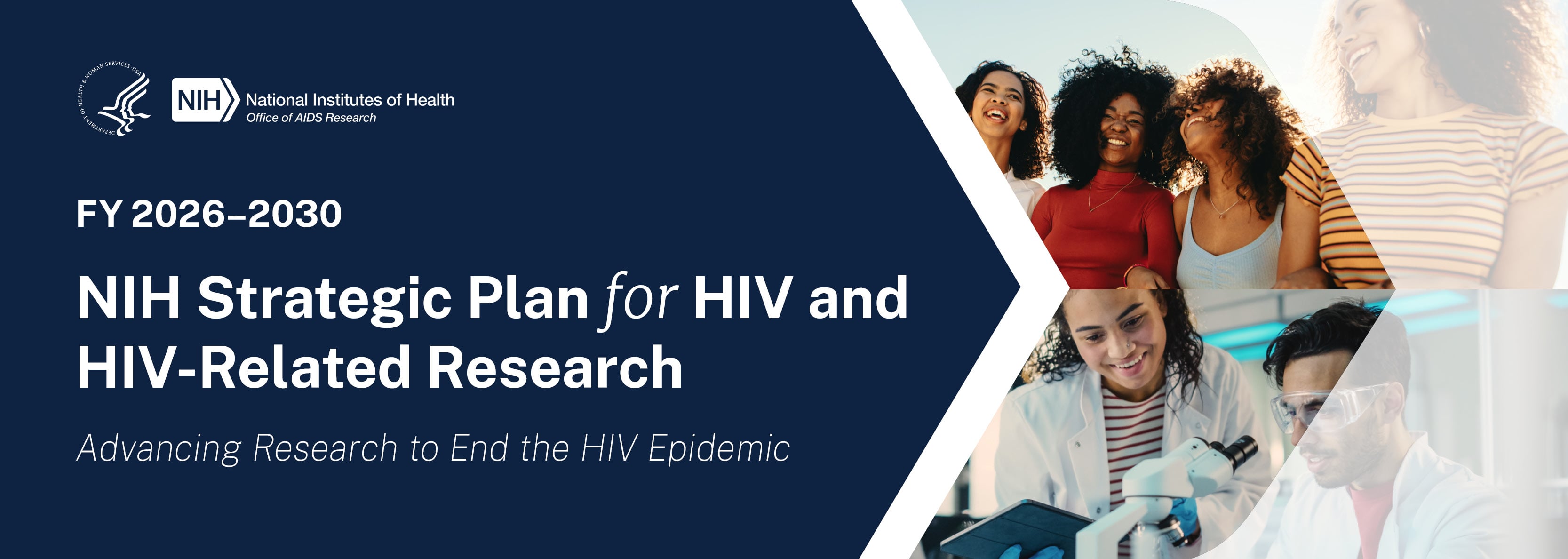
OAR is pleased to share the FY 2026–2030 NIH Strategic Plan for HIV and HIV-Related Research, the first NIH HIV research strategic plan developed during OAR Director Dr. Geri Donenberg’s tenure. The Plan introduces a new framework for NIH HIV research, organized around three strategic goals: advancing HIV science across the research-to-practice continuum; strengthening the capacity and infrastructure needed to support that research; and managing the NIH HIV research investment efficiently and effectively. Read more about the new plan in Dr. Donenberg’s blog post.
Meet the Director

Director, Office of AIDS Research
National Institutes of Health


